
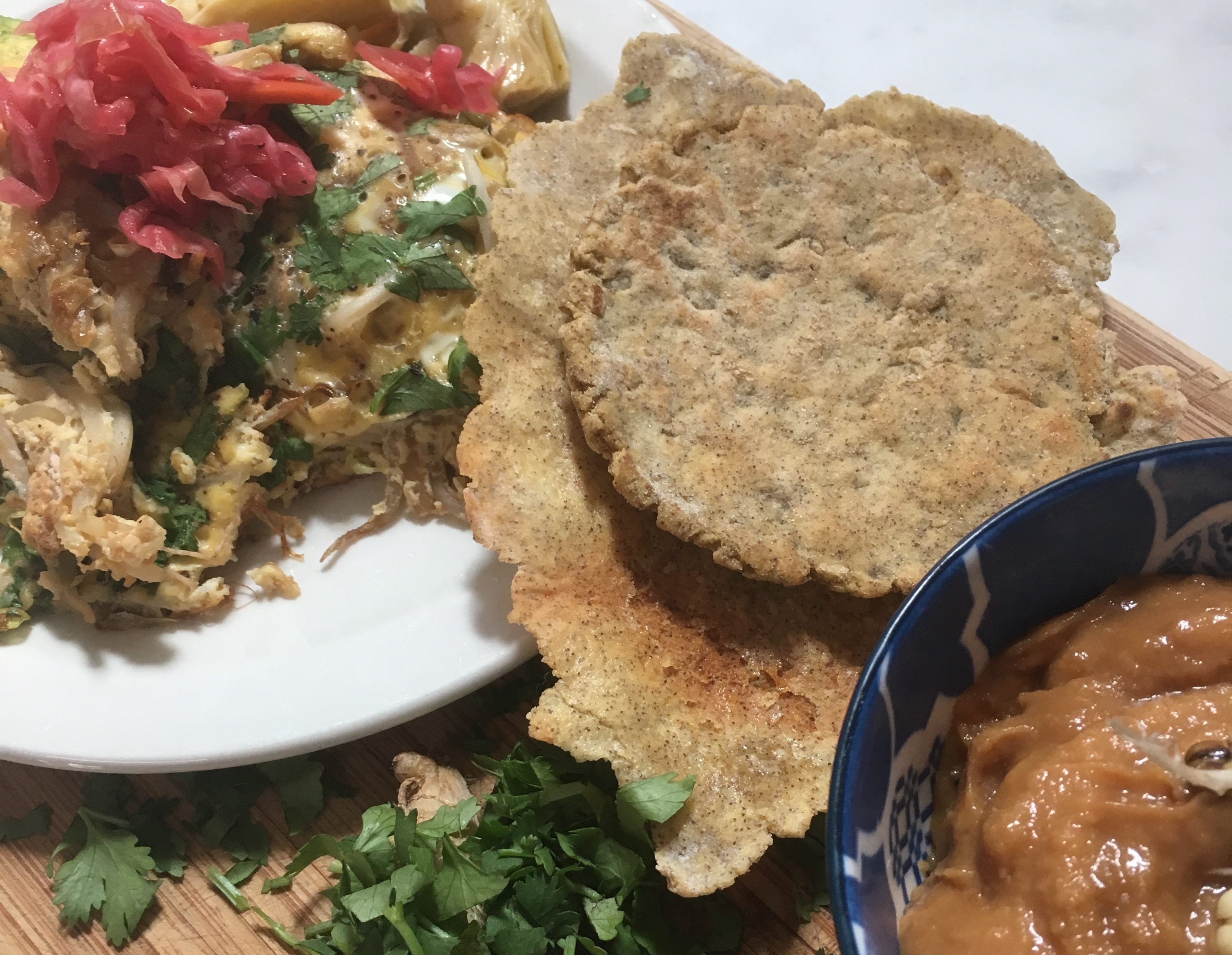
A Hearty Slavic-Inspired Vegan Flatbread Packed With Fermented Flavours
A gluten-free fermented potato flatbread perfect for autumn and winter — and the ultimate way to enjoy multiple gut-loving ferments in one delicious meal.
How many ferments can you enjoy in one meal? This hearty Slavic-inspired vegan flatbread proves the answer can be plenty. Traditionally made with fermented potatoes and naturally gluten-free, this rustic bread is most often served during the cooler months when potatoes are at their peak. I recently brought a fresh batch to a workshop planning session with my friend Paula, pairing it with a miso–mirin ginger dip. She completed the feast with a veggie-packed omelette, mung bean sprouts, fermented ginger pickles, wild fermented red cabbage, and fragrant coriander. Together, it became a colourful, nourishing brunch celebrating the rich, comforting flavours of fermentation.
Ingredients
Ingredients
- 1 kg (2.2 lb) white potatoes
- 300 g (2½ cups) rice or chickpea flour
- ½ tsp miso
- extra flour for rolling
Method
1. Boil potatoes whole with skins on for about 15 minutes, depending on size. When soft, drain and cool. The potatoes are then easy to peel with a paring knife ahead of time The older the potatoes and the colder the better, as the dough will be less sticky.

2. In a bowl or on a well-floured surface, grate potatoes on the small holes of a grater or mash.
3. Mix in flour, miso, and potatoes and knead until it forms a not-too-sticky dough, adding extra flour as needed. Roll out on a lightly floured surface into a log about 60 cm (2 feet) long.
4. Cut the log into 14 pieces about 5 cm wide. Once the dough is mixed, work with it right away and don’t leave it to sit, otherwise, it will get more sticky.

5. Start warming up your frying pan over medium heat.
6. Liberally flour a flat surface. Toss a piece of dough around in the flour and roll into a circle with a rolling pin. They can be any shape you like. If the rolling pin gets sticky, scrape it off right away otherwise it will build up more dough. You want it to be fairly thin, but thick enough so it doesn’t fall apart and so that the final bread has some bite to it.
7. Carefully transfer the flatbread to a dry frying pan (no oil on it). When one side starts to bubble, you can flip it. Use a butter knife or fork to poke large pockets of hot air (although not necessary). It takes about 2-3 min on each side.
8. While one flatbread is cooking, roll out another.
9. When finished cooking, put the bread on a plate and brush one or both sides with melted oil or other fat.
10. Serve warm. Can also be refrigerated or frozen, but warm up in oven or steam before serving. Spread with various fillings or just brush on melted oil and serve with various toppings rolled or folded into quarters.

Leave a Reply